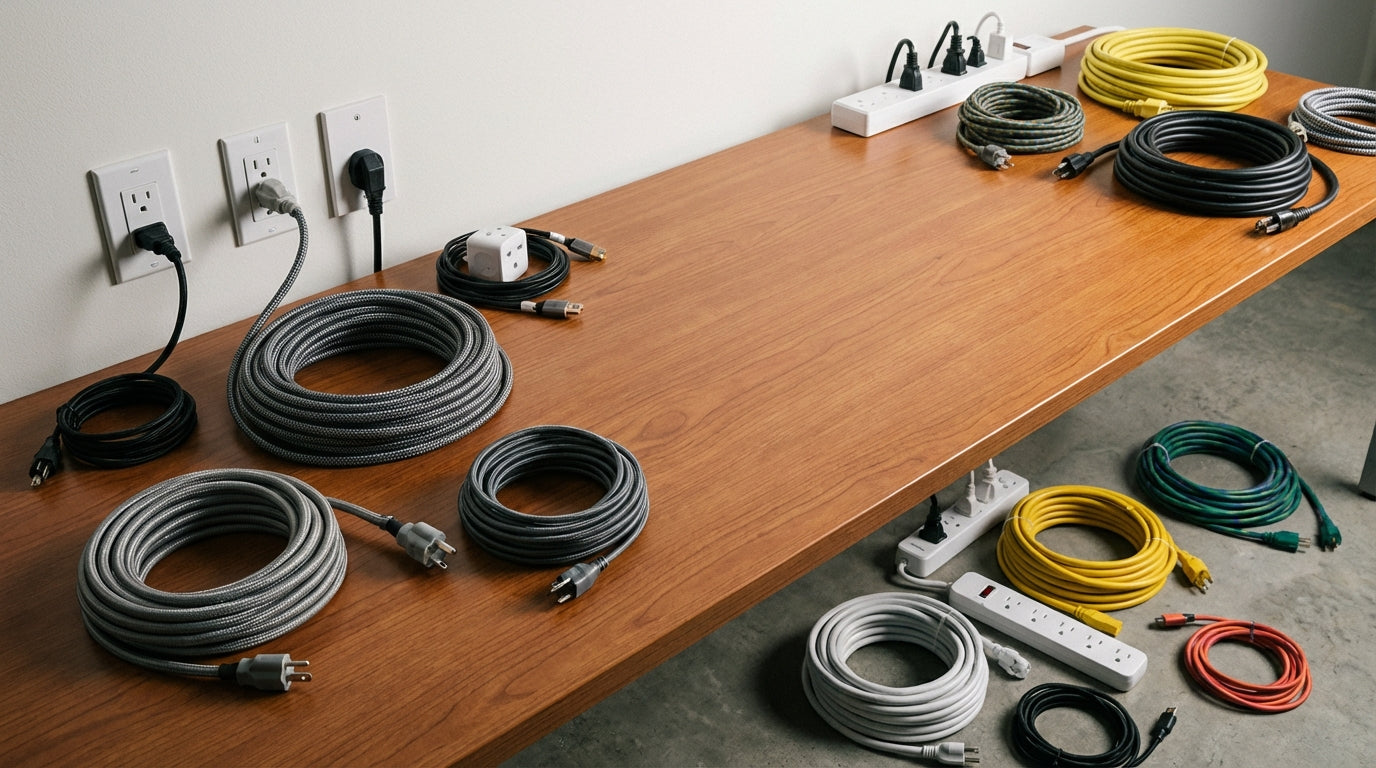
Power Cables Buying Guide: How to Choose the Right Extension Cord
Power Cables Buying Guide: How to Choose the Right Extension Cord
Power cables and extension cords are essential for creating convenient access to electricity in homes and offices. Whether you need to reach distant outlets, power multiple devices simultaneously, or bring electricity to areas where permanent wiring isn't practical, the right power cable can transform how you work and live.
Many people assume all power cables are basically the same, but choosing the wrong specifications can lead to poor performance, safety hazards, or damaged equipment. Wire gauge, amperage capacity, plug types, and safety features all matter more than you might think.
At Tecisoft, we help customers navigate power cable specifications daily, ensuring they get solutions that are both safe and suited to their specific power distribution needs.
Understanding Wire Gauge and Load Capacity
The wire gauge (AWG) inside your power cable determines how much electrical current it can safely carry. Thicker wires (lower AWG numbers) handle more power and longer distances without dangerous voltage drop or overheating.
AWG specifications for common applications:
- 18 AWG: Light-duty up to 7 amps, maximum 25 feet (lamps, phone chargers, small electronics)
- 16 AWG: Medium-duty up to 10 amps, up to 50 feet (computers, TVs, office equipment)
- 14 AWG: Heavy-duty up to 15 amps, up to 100 feet (power tools, heaters, multiple devices)
- 12 AWG: High-capacity 15 amps at 100+ feet (contractors, workshop equipment, long runs)
Match wire gauge to both your power needs and cable length. A 50-foot 18 AWG cord that works fine for a desk lamp will overheat and create fire risk if used for a space heater, even if the plugs physically fit.
Quick gauge selection rule: For every doubling of length, step up one gauge size to maintain the same safe amperage capacity.
NEMA Plug Types and Grounding
North American power cables use standardized NEMA plugs that must match both your outlet and device requirements.
Common NEMA configurations:
-
NEMA 1-15 (two-prong): 125V, 15 amp maximum, ungrounded
- Use only for double-insulated devices like lamps, clocks, phone chargers
- Cannot safely power grounded appliances
-
NEMA 5-15 (three-prong): 125V, 15 amp, grounded
- Standard for most home and office equipment
- Required for computers, printers, power tools, anything with metal housing
- The round ground pin provides essential safety protection
Always choose grounded (three-prong) cables unless you specifically need to power only double-insulated devices. The ground wire diverts electrical faults safely away from you and your equipment.
For computer equipment, consider IEC C13 power cords ("computer power cords") which provide secure connections to monitors, desktop computers, and enterprise equipment.
Amperage Requirements and Safety Margins
Your power cable's amperage rating must meet or exceed the total draw of everything you'll plug into it. Standard household outlets provide 15 amps, but safe practice requires leaving headroom.
Device power consumption examples:
- Desk lamp: 0.5-1 amp
- Laptop computer: 1-3 amps
- Desktop computer and monitor: 3-5 amps
- Laser printer: 8-12 amps
- Space heater: 12-15 amps
- Power tools: 8-15 amps
Safe loading guidelines:
- Never exceed 80% of cord rating for continuous use
- Add up all connected devices, don't just check the highest single load
- Choose 15-amp cords for maximum flexibility with standard outlets
Red flags that indicate overloading:
- Cord feels warm or hot during use
- Lights dim when devices turn on
- Frequent circuit breaker trips
- Burning smell or discolored plugs
Indoor vs. Outdoor Power Cable Specifications
Environmental conditions determine which cable jacket and safety features you need.
Indoor power cables:
- Standard vinyl (SJT) or rubber (SJ) jackets
- Designed for dry, temperature-controlled environments
- Less expensive and more flexible
- Not suitable for moisture exposure
Outdoor power cables:
- Weather-resistant jackets marked with "W" suffix (SJTW, SJOOW)
- Thicker insulation resists UV, moisture, and temperature extremes
- Often include GFCI protection built into the plug
- Can be used indoors, but indoor cords should never go outdoors
GFCI (Ground-Fault Circuit Interrupter) protection:
- Essential for any outdoor use or damp locations
- Detects electrical leakage and cuts power in milliseconds
- Available as plug-in modules or built into the cord
- Required by electrical code for many outdoor applications
Length Considerations and Voltage Drop
Longer power cables introduce voltage drop that can damage equipment or cause poor performance. The combination of length and load determines whether voltage drop becomes problematic.
Practical length limits by application:
- 25 feet or less: Most applications work fine with appropriate gauge
- 25-50 feet: Step up one wire gauge size for the same amperage
- 50-100 feet: Requires heavier gauge wire; consider 12 AWG for 15-amp loads
- Over 100 feet: Calculate voltage drop carefully; may need 10 AWG or dedicated wiring
Voltage drop symptoms:
- Motors run slower or overheat
- Lights appear dimmer than normal
- Electronics shut off unexpectedly
- Equipment doesn't reach full performance
For critical applications over long distances, use voltage drop calculators to ensure adequate power delivery.
Multiple Outlet and Power Strip Integration
Power cables often work with power strips to distribute electricity to multiple devices. This combination requires careful attention to total load and safety features.
Power strip safety considerations:
- Never daisy-chain multiple strips together
- Choose strips with individual circuit breakers or switches
- Ensure the strip's rating matches or exceeds your cable's capacity
- Look for surge protection for sensitive electronics
Calculate total load carefully:
- Add up the amperage of all devices you'll plug in
- Ensure total doesn't exceed 80% of the cable's rating
- Remember that some devices have startup surges higher than running load
- Consider future expansion in your calculations
Essential Safety Features and Certifications
Reliable power cables include specific safety features and certifications that protect both users and equipment.
Required safety certifications:
- UL Listed: Tested for electrical and fire safety by Underwriters Laboratories
- CSA approval: Canadian Standards Association certification for Canada
- Voltage and temperature ratings: Must match your application (typically 125V, 70°C for indoor use)
Important construction features:
- Reinforced strain relief: Prevents wire breakage at plug connections
- Flame-retardant jacket: Slows fire spread if overheating occurs
- Molded plugs: More durable than assembled plugs for frequent use
- Clear gauge markings: Should be printed on the jacket for verification
Visual inspection checklist:
- No cuts, cracks, or exposed wires in the jacket
- Plugs fit snugly in outlets without looseness
- Ground pin straight and undamaged
- No burn marks or discoloration around plugs
FAQ
What's the difference between SJT and SJTW power cables?
SJT cables have standard vinyl jackets for indoor use only. SJTW cables add weather resistance with a "W" designation, making them suitable for outdoor applications. The weather-resistant version costs slightly more but can be used anywhere.
Can I use a higher amperage power cable than my device requires?
Yes, using a higher-rated cable is always safe and often recommended. A 15-amp cable can safely power a 5-amp device, but never use a lower-rated cable than your device requires.
How do I know if my extension cord is causing voltage drop problems?
Measure voltage at the end of the cord under load using a multimeter. You should see within 5% of your outlet voltage (117-125V for standard outlets). Significant voltage drop indicates you need a shorter cord or heavier gauge wire.
Are outdoor power cables safe to use permanently?
Outdoor-rated cables can handle weather exposure, but they're not intended for permanent installation. For permanent outdoor power, install proper weatherproof outlets and wiring according to electrical code requirements.
What length power cable should I choose for my home office?
Measure the actual distance needed, then add 20% extra for routing flexibility. For typical home office loads (computer, monitor, printer), 25 feet of 14 AWG cable provides good capacity and reach without voltage drop concerns.
Do I need GFCI protection for basement or garage use?
Yes, GFCI protection is required by electrical code for unfinished basements, garages, and any area where moisture could be present. Use GFCI-protected power cables or plug into GFCI outlets.
Making Your Power Cable Decision
Choosing the right power cable comes down to matching electrical capacity, safety features, and environmental requirements to your specific application.
Your power cable selection checklist:
- Calculate total amperage - Add up all devices you'll connect
- Measure required length - Add 20% buffer for routing flexibility
- Choose appropriate gauge - Match AWG to amperage and length requirements
- Verify plug compatibility - Ensure NEMA type matches your outlets and devices
- Consider environment - Indoor vs. outdoor rating and GFCI requirements
- Check safety certifications - Look for UL listing and appropriate voltage ratings
Start with grounded 15-amp cables for maximum versatility, then adjust gauge based on length and load requirements. When in doubt, choose a heavier gauge for better safety margins and future flexibility.
Ready to power your workspace safely and efficiently? Explore our complete power cables range at Tecisoft for professional-grade solutions that meet demanding home and business applications.
Ready to find the right solutions for your needs?
Explore Collection