Beyond the Clutter: The Unsung Benefits of Rack Cabinets for Server Room Organization
Step into any well-managed server room, and you'll likely notice a common theme: order. Cables neatly bundled, equipment uniformly stacked, and a general sense of calm efficiency. This isn't just about aesthetics; it's a testament to the power of a fundamental piece of infrastructure: the rack cabinet.
Often seen as just a metal box, rack cabinets are the unsung heroes of server room organization, offering a multitude of benefits that extend far beyond simply holding your equipment. If your server room resembles a spaghetti factory, it's time to understand why investing in proper rack cabinets is a game-changer for your IT operations.
1. Superior Organization and Space Optimization
This is perhaps the most immediate and obvious benefit. Rack cabinets provide a standardized, vertical stacking system for your servers, network switches, storage devices, and other rack-mountable equipment.
- Vertical Efficiency: By stacking equipment, racks dramatically reduce the floor space required, allowing you to fit more hardware into a smaller footprint. This is crucial for maximizing real estate in dedicated server rooms or even smaller IT closets.
- Standardized Units (U): Equipment is designed in "U" units (1U = 1.75 inches), ensuring everything fits together seamlessly. This standardization makes planning and scaling your infrastructure much easier.
- Reduced Clutter: With equipment neatly mounted, cables can be managed more effectively, eliminating the tangled mess that can hinder airflow and make troubleshooting a nightmare.
2. Enhanced Airflow and Cooling Efficiency
Heat is the sworn enemy of electronic equipment. Proper cooling is paramount for equipment longevity and performance, and rack cabinets play a vital role.
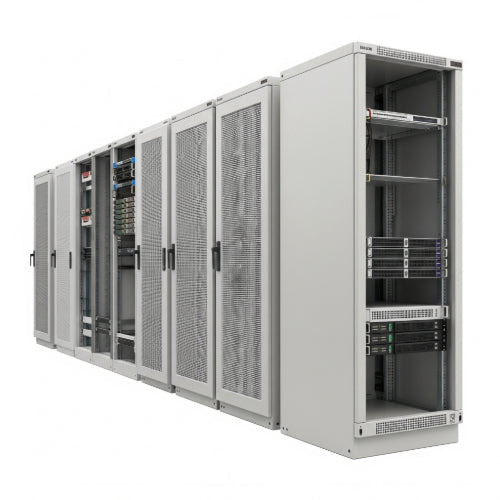
- Controlled Airflow: Many rack cabinets are designed with perforated doors (front and rear) to allow for optimal front-to-back airflow, which is the standard cooling method for most server hardware.
- Hot Aisle/Cold Aisle Containment: In larger data centers, rack cabinets are arranged to create hot aisles and cold aisles. The cold air is drawn in from the front (cold aisle), passes through the equipment, and is exhausted as hot air into the back (hot aisle), preventing hot air recirculation.
- Fan Integration: Some racks come with integrated fans or are designed to easily accommodate rack-mounted fan units, providing additional cooling where needed. This directed airflow is far more effective than just having general room cooling.
3. Improved Security and Access Control
Protecting your valuable hardware from unauthorized access is non-negotiable. Rack cabinets provide a crucial layer of physical security.
- Lockable Doors and Side Panels: Most rack cabinets feature lockable front and rear doors, as well as removable (and often lockable) side panels. This prevents unauthorized personnel from tampering with or stealing equipment.
- Restricted Access: By housing equipment within locked racks, you can implement stricter access control protocols for your server room, ensuring only authorized individuals can gain entry to specific areas or equipment.
- Auditable Access: Some advanced rack systems integrate with access control solutions, providing an audit trail of who accessed which rack and when.
4. Simplified Cable Management
Cable spaghetti is a significant pain point in any IT environment. Rack cabinets offer numerous features to help tame the tangles.
- Vertical and Horizontal Cable Management: Racks often have built-in vertical cable channels and can accommodate horizontal cable management bars, allowing for neat routing of power, network, and data cables.
- Reduced Interference: Organized cables are less prone to kinks, snags, and accidental disconnections. They also minimize the risk of electromagnetic interference (EMI) between power and data cables.
- Easier Troubleshooting: When cables are neatly routed and labeled, identifying and troubleshooting connectivity issues becomes significantly faster and less frustrating.
5. Protection from Environmental Factors
While not hermetically sealed, rack cabinets offer a degree of protection against common environmental threats.
- Dust and Debris: Enclosed cabinets help reduce the accumulation of dust and debris on sensitive electronic components, which can cause overheating and premature failure.
- Accidental Damage: They act as a physical barrier, protecting equipment from accidental bumps, spills, or other hazards that could occur in an open environment.
- Noise Reduction: While not their primary function, enclosed racks can somewhat dampen the operational noise from servers and cooling fans, contributing to a more comfortable working environment for IT staff.
6. Scalability and Future-Proofing
As your business grows, so too will your IT infrastructure. Rack cabinets are designed with scalability in mind.
- Modular Design: You can easily add more rack cabinets as your needs expand, maintaining a consistent and organized setup.
- Predictable Expansion: Knowing the available "U" space in your racks makes it easier to plan for new equipment installations and capacity upgrades.
- Efficient Upgrades: Swapping out old equipment for new is much smoother when you have a structured racking system.
The Bottom Line
A server room organized with proper rack cabinets isn't just a tidy space; it's a resilient, efficient, and secure operational hub. The benefits extend from improved airflow and security to simplified management and scalability. While the initial investment might seem significant, the long-term gains in equipment longevity, reduced downtime, and streamlined operations make rack cabinets an indispensable asset for any organization serious about its IT infrastructure. Don't let clutter define your server room – embrace the order and efficiency that rack cabinets bring.