Bringing Learning to Life: How "Apex University" Transformed Classrooms with Projectors and Interactive Displays
In the rapidly evolving landscape of education, engaging students and facilitating dynamic learning experiences is more crucial than ever. For "Apex University," a forward-thinking institution committed to pedagogical innovation, their traditional classroom technology was becoming a limitation. Recognizing the need to equip both educators and students with tools for modern learning, the university embarked on a significant upgrade, integrating state-of-the-art projectors and interactive displays into its classrooms. This blog explores how this technological leap has revolutionized teaching and learning at Apex University.
Before the widespread adoption of modern display technology, Apex University's classrooms primarily relied on whiteboards and older overhead projectors. This presented several challenges:
- Limited Engagement: Static presentations and difficult-to-read projections often failed to capture student attention effectively.
- Lack of Interactivity: Collaborative problem-solving and hands-on engagement were cumbersome, relying heavily on physical materials.
- Inefficient Content Delivery: Sharing multimedia content, online resources, or real-time annotations was clunky and time-consuming.
- Difficulty for Diverse Learning Styles: Visual learners and those who benefit from direct interaction were not adequately supported.
- Outdated Image: The classrooms projected an image that didn't align with the university's commitment to cutting-edge education.
Apex University understood that true learning goes beyond passive listening. Their strategic investment focused on creating dynamic learning environments through:
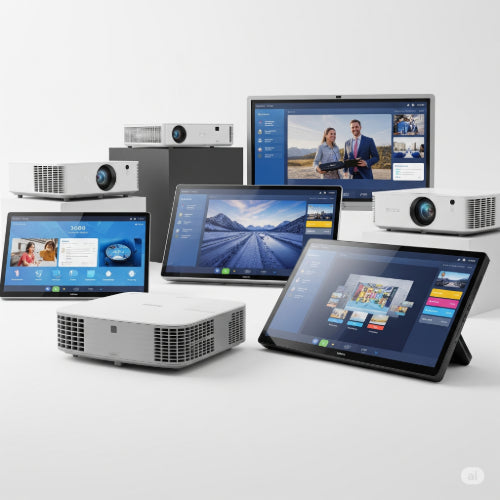
- High-Definition Projectors: Installed in larger lecture halls and classrooms, these projectors deliver crisp, bright images and videos, ensuring all students, even those in the back, can clearly see the content.
- Large Interactive Flat Panel Displays (IFPDs): Integrated into smaller classrooms and seminar rooms, these touch-enabled screens act as giant tablets, allowing instructors and students to write, draw, annotate, and manipulate digital content directly.
- Wireless Connectivity Solutions: Enabling seamless screen sharing from laptops, tablets, and smartphones, promoting a more fluid and collaborative presentation environment.
- Integrated Audio Systems: Ensuring that all multimedia content, including videos and online conferences, is heard clearly throughout the room.
- User-Friendly Control Interfaces: Simplifying the operation of the new technology for educators, regardless of their tech proficiency.
The Transformative Impact: A New Era of Teaching and Learning
The integration of these advanced display technologies has brought about a profound positive change at Apex University:
- Increased Student Engagement: The vibrant visuals, dynamic content, and interactive capabilities of the new displays captivate student attention, making lessons more engaging and memorable.
- Enhanced Collaboration and Participation: Interactive displays have become central hubs for group work. Students can collaboratively solve problems, brainstorm ideas, and present their findings directly on the screen, fostering active participation.
- Dynamic Content Delivery: Educators can seamlessly switch between presentations, high-resolution videos, simulations, and real-time internet resources, enriching their lessons and making complex concepts easier to understand.
- Personalized Learning Experiences: The flexibility of the technology allows instructors to cater to various learning styles, incorporating more visual, auditory, and kinesthetic elements into their teaching.
- Streamlined Annotation and Feedback: Instructors can easily annotate directly on projected content or interactive displays, highlighting key points, making corrections, and providing instant visual feedback.
- Improved Efficiency for Educators: Preparing and delivering lessons has become more efficient, with less time spent on setting up outdated equipment and more time focused on teaching.
- Modern Image and Attractiveness: The upgraded classrooms reflect Apex University's commitment to innovation, enhancing its appeal to prospective students and faculty.
Conclusion:
Apex University's proactive approach to upgrading its classrooms with projectors and interactive displays serves as a powerful testament to the impact of modern educational technology. By creating dynamic, engaging, and collaborative learning environments, they have not only improved the student experience but also empowered their educators to teach more effectively. This strategic investment underscores the belief that when technology is thoughtfully integrated, it can truly bring learning to life, preparing students for the challenges and opportunities of the future. For universities aiming to stay at the forefront of education, embracing these display innovations is no longer an option, but a necessity.