Fortifying the Foundation: How a Small Business Improved Its Security with Network Switches and Firewalls
For any business, big or small, cybersecurity is no longer an option – it's a necessity. Small businesses, in particular, often operate with limited IT resources, making them attractive targets for cybercriminals. A single breach can lead to devastating data loss, financial ruin, and irreparable damage to reputation. This was a concern for a burgeoning small business that realized their basic network setup wasn't enough to withstand modern threats. Their journey to a more secure environment highlights the critical role of two fundamental network components: network switches and firewalls.
The Challenge: A Growing Business, Growing Risks
Initially, this small business, a graphic design agency, had a simple flat network. All devices — computers, servers, printers — were connected through basic, unmanaged switches, and their "security" largely relied on a consumer-grade router with basic firewall capabilities. As their client base grew and they handled more sensitive creative assets and client data, the owners realized this setup was a ticking time bomb. They needed to move beyond basic protection to a more robust, business-grade security posture.
Their primary concerns included:
- Internal Threat Containment: If one device got infected, how would they stop it from spreading?
- External Attack Prevention: Their basic router wasn't providing adequate protection against sophisticated external threats.
- Data Protection: Ensuring client designs and intellectual property were safe.
- Regulatory Compliance: Meeting growing data privacy standards, even as a small entity.
The Solution: Strategic Upgrade of Switches and Firewall
Working with an IT consultant, the business implemented a two-pronged strategy:
1. Implementing Managed Network Switches for Segmentation:
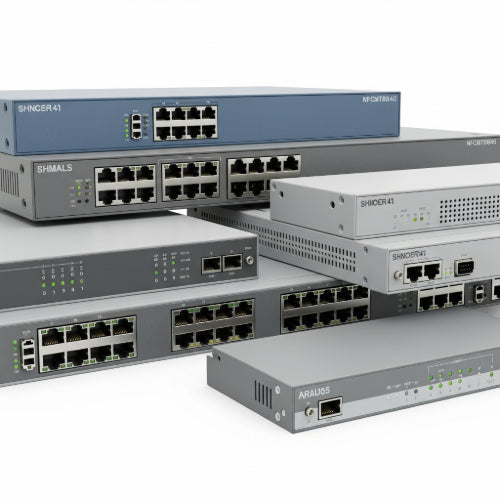
They replaced their unmanaged switches with managed network switches. This was a game-changer for internal security:
- Network Segmentation (VLANs): The managed switches allowed them to create Virtual Local Area Networks (VLANs). They segmented their network into distinct logical compartments: one for administrative and server traffic, another for employee workstations, and a separate one for guest Wi-Fi and IoT devices (like smart printers). This meant that even if a guest's device or an employee's computer became compromised, the infection would be contained within its VLAN, preventing lateral movement to critical servers or other sensitive parts of the network.
- Port Security: They configured port security on the switches, limiting which MAC addresses could connect to specific ports. This prevented unauthorized devices from plugging into the network.
- Monitoring and Control: The managed switches provided better visibility into network traffic, allowing their IT consultant to monitor for unusual activity and quickly identify potential issues.
2. Deploying a Business-Grade Firewall:
They upgraded from a consumer router to a dedicated business-grade firewall (often referred to as a Unified Threat Management - UTM - appliance for small businesses). This significantly bolstered their perimeter defense:
- Advanced Threat Protection (ATP): The new firewall offered much more sophisticated intrusion detection and prevention (IDS/IPS) capabilities, protecting against known exploits, malware, and sophisticated attacks that their old router couldn't handle.
- Application Control: They gained the ability to control and monitor specific applications, blocking potentially risky or non-work-related software from accessing the internet.
- Web Filtering: The firewall enabled content filtering, preventing access to malicious websites and improving overall internet security by blocking access to inappropriate or dangerous sites.
- VPN Capabilities: For remote access, the firewall provided robust Virtual Private Network (VPN) capabilities, ensuring that remote employees could securely connect to the company's internal resources.
- Centralized Management: The new firewall offered a centralized interface for managing all security policies, making it easier to adapt to new threats and business needs.
The Impact: Peace of Mind and Enhanced Operations
The transformation was evident:
- Reduced Security Incidents: The company experienced a significant drop in suspicious network activity and no major security breaches after the implementation.
- Improved Network Stability: The better organization and segmentation contributed to a more stable and reliable network.
- Enhanced Data Protection: Owners and employees felt more confident that client data and intellectual property were secure.
- Future-Proofing: The scalable nature of managed switches and the advanced features of the business-grade firewall positioned them well for future growth and evolving cybersecurity challenges.
- Increased Confidence: The owners now have peace of mind knowing their critical assets are protected by robust, multi-layered security.
This case study demonstrates that for small businesses, investing in proper network switches and a robust firewall isn't an unnecessary expense. It's a fundamental investment in security, productivity, and long-term viability in an increasingly risky digital landscape. By fortifying their network's foundation, this design agency ensured they could continue to innovate and grow securely.