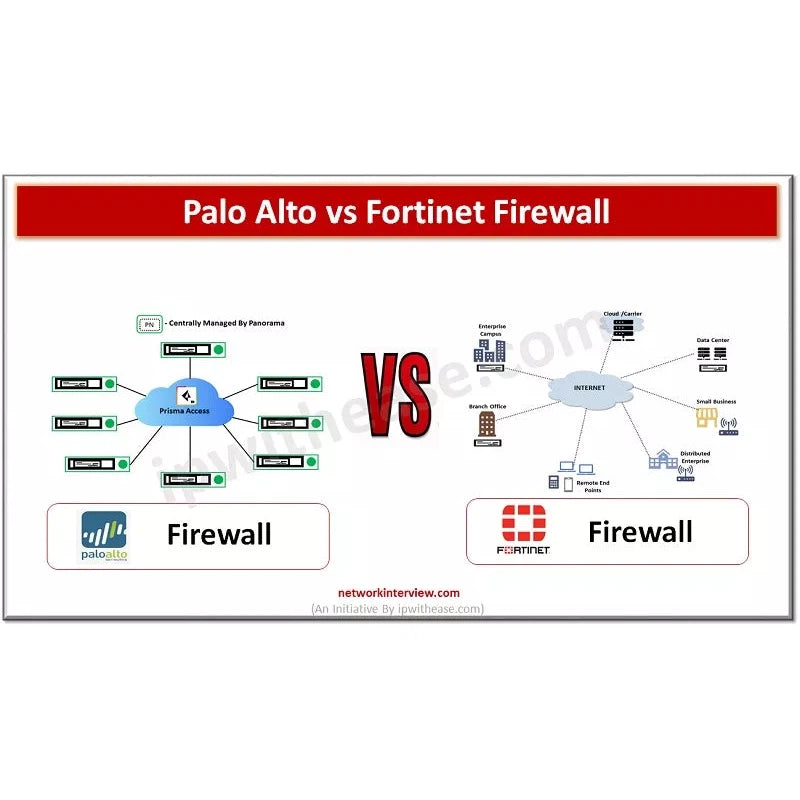
Fortinet Next-Generation Firewall vs. Palo Alto Networks NGFW: A Comparative Analysis

In the ever-evolving landscape of cybersecurity, organizations require robust solutions to protect their networks from an array of threats. Two prominent players in the field of network security are Fortinet and Palo Alto Networks, both offering powerful next-generation firewalls (NGFW). In this blog post, we will delve into a comparative analysis of Fortinet Next-Generation Firewall and Palo Alto Networks NGFW, exploring their features, strengths, and differences to help you make an informed decision for your organization's security needs.
Fortinet Next-Generation Firewall:
Fortinet's NGFW solutions have gained widespread recognition for their comprehensive security features and high performance. Here are some key aspects of Fortinet's offering:
1. Security Fabric Architecture: Fortinet leverages a Security Fabric Architecture, which ensures integrated and coordinated security across the entire network infrastructure. This approach allows for consistent policy enforcement and threat intelligence sharing.
2. Threat Detection and Prevention: Fortinet's NGFW incorporates advanced threat detection and prevention mechanisms, including intrusion prevention systems (IPS), malware detection, sandboxing, and antivirus protection. These features work in tandem to identify and mitigate potential threats.
3. SSL Inspection: Fortinet's NGFW provides SSL/TLS inspection capabilities, enabling the inspection of encrypted traffic to identify and block threats hidden within encrypted communications, thus ensuring end-to-end security.
4. Scalability and Performance: Fortinet's NGFWs are designed to handle high traffic volumes and provide optimal performance even in demanding environments. They offer scalable options to accommodate the growth of your network without compromising security.
Palo Alto Networks NGFW:
Palo Alto Networks is known for its advanced network security solutions, including their NGFW offerings. Let's explore some key features of Palo Alto Networks NGFW:
1. Single-Pass Architecture: Palo Alto Networks employs a single-pass architecture that enables efficient processing of traffic, reducing latency and maximizing performance. This approach eliminates the need for multiple security scans, leading to improved network throughput.
2. Application Visibility and Control: Palo Alto Networks NGFW offers extensive application visibility and control capabilities. It utilizes App-ID technology to identify and control applications traversing the network, allowing administrators to enforce granular policies based on application usage and behavior.
3. Threat Intelligence Integration: Palo Alto Networks integrates its NGFW with WildFire, a cloud-based threat intelligence platform. This integration enables real-time threat detection and prevention by leveraging global threat intelligence and providing immediate updates to protect against emerging threats.
4. Advanced Analytics and Reporting: Palo Alto Networks NGFW provides robust analytics and reporting features that deliver valuable insights into network traffic patterns, security events, and user behavior. These insights help organizations gain a deeper understanding of their network environment and make informed decisions.
Differences and Considerations:
While both Fortinet and Palo Alto Networks offer powerful NGFW solutions, there are some notable differences that may influence your decision:
1. Cost: Cost considerations may vary based on the specific deployment requirements and licensing models offered by each vendor. It is important to assess the overall value, including the features, performance, and support, against the budgetary constraints of your organization.
2. User Interface and Ease of Management: Evaluate the user interfaces and management capabilities of both solutions to ensure they align with your organization's needs. A user-friendly interface and streamlined management can significantly reduce the complexity of deploying and maintaining the NGFW.
3. Integration with Existing Infrastructure: Consider the compatibility and integration capabilities of each NGFW with your existing network infrastructure and security ecosystem. Seamless integration can enhance overall security and operational efficiency.
Conclusion:
When it comes to choosing between Fortinet Next-Generation Firewall and Palo Alto Networks NGFW, it's crucial to assess your organization's specific security requirements, budget constraints, and operational considerations. Both vendors offer robust solutions with comprehensive security features and excellent performance. Conducting a thorough evaluation and possibly engaging in proof-of-concept testing can help you determine which NGFW aligns best with your organization's needs and provides the highest level of protection against evolving cyber threats.