From Concrete to Green: How to Build a Sustainable Office with Smart Tech and Furniture Choices
The modern office is undergoing a profound transformation. Beyond flexible work arrangements and collaborative spaces, there's a growing imperative to make our workplaces not just productive, but also profoundly sustainable. Building a "green office" isn't just about reducing waste; it's about making conscious choices in every aspect, from the energy we consume to the furniture we sit on and the tech we use.
Creating an eco-friendly office is a tangible way to demonstrate corporate social responsibility, appeal to environmentally conscious talent, and often, save significant operational costs in the long run. So, if you're looking to transform your workspace into a beacon of sustainability, here’s how to do it with smart tech and furniture choices:
The Tech Revolution: Powering Your Office with Eco-Conscious Choices
Technology is the backbone of almost every modern business, but it can also be an energy guzzler. Making sustainable tech choices means looking beyond raw power and focusing on efficiency, longevity, and responsible sourcing.
1. Energy-Efficient Workstations and Servers: The core of your IT infrastructure can be your biggest energy drain.
- Workstations & Laptops: Opt for devices with ENERGY STAR, EPEAT, or TCO Certified labels. These certifications indicate that products meet stringent energy efficiency guidelines and adhere to environmental performance criteria. Laptops generally consume less power than desktops, making them a greener choice for many roles.
- Servers: For your data center needs, prioritize energy-efficient servers and explore solutions like virtualization, which allows you to run multiple virtual machines on fewer physical servers, drastically reducing power consumption and cooling needs.
2. Smart Power Management: Combat "vampire drain" – the power drawn by devices even when turned off or in standby.
- Smart Power Converters/Strips: These intelligent devices cut power to peripherals when the main device (like a computer) is shut down, eliminating phantom load. Many also offer scheduling features to automatically power down equipment after hours.
- Power Management Settings: Encourage employees to utilize sleep modes and power-saving settings on their devices.
3. Sustainable Displays: Monitors are often on for long periods.
- Look for displays with LED backlighting and ENERGY STAR ratings. LED technology is significantly more energy-efficient than older LCD or CRT displays.
4. Eco-Friendly Peripherals: Printers, scanners, and other peripherals also contribute to energy use and waste.
- Network Printers: Consolidate printing to fewer, more efficient network printers with duplex (two-sided) printing capabilities to save paper. Look for models with low power consumption in standby mode.
- Recycled Materials: Choose peripherals made with recycled content.
5. Responsible E-Waste Management: The lifecycle of tech extends beyond its use. Partner with certified e-waste recyclers to ensure old electronics are disposed of responsibly, keeping hazardous materials out of landfills.
Furniture for a Greener Space: Beyond Aesthetics
Your office furniture isn't just about comfort and aesthetics; it's about the materials it's made from, how it's manufactured, and what happens to it at the end of its life.
1. Sustainable Materials:
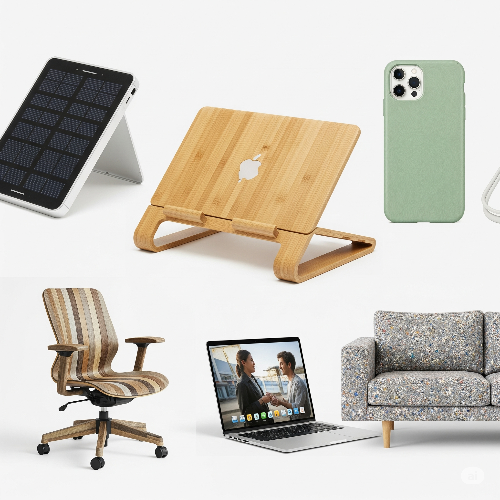
- Recycled Content: Look for desks, chairs, and storage units made from recycled plastics, metals, or reclaimed wood.
- Renewable Resources: Bamboo, cork, and sustainably harvested timber (certified by organizations like the Forest Stewardship Council - FSC) are excellent choices.
- Natural Fabrics: Opt for upholstery made from organic cotton, wool, or hemp, avoiding synthetic, petroleum-based fabrics where possible.
2. Low VOCs and Healthy Air Quality:
- Volatile Organic Compounds (VOCs) found in paints, adhesives, and finishes can off-gas into the office air, impacting employee health. Choose furniture certified with GREENGUARD Gold or similar labels, ensuring low chemical emissions.
3. Durability and Longevity:
- The most sustainable product is one that lasts. Invest in high-quality, durable furniture designed for longevity. This reduces the need for frequent replacements, minimizing waste and resource consumption in the long run.
- Modular and Adaptable Designs: Furniture that can be reconfigured or easily repaired extends its life cycle and reduces the need for entirely new purchases as your office evolves.
4. Ethical Manufacturing and Circularity:
- Support manufacturers who demonstrate responsible manufacturing processes, including energy-efficient production and fair labor practices.
- Inquire about take-back programs or recycling initiatives from furniture manufacturers. This ensures that when furniture does reach its end of life, it can be properly recycled or repurposed, contributing to a circular economy.
The Collective Impact
Building a green office is a continuous journey, not a destination. It requires a holistic approach that considers every element of your workspace. By consciously choosing energy-efficient technology and sustainably sourced furniture, you're not just creating a more pleasant and healthy environment for your employees; you're also making a tangible contribution to a more sustainable future for everyone. It's a powerful statement that a productive business can, and should, go hand-in-hand with environmental stewardship.