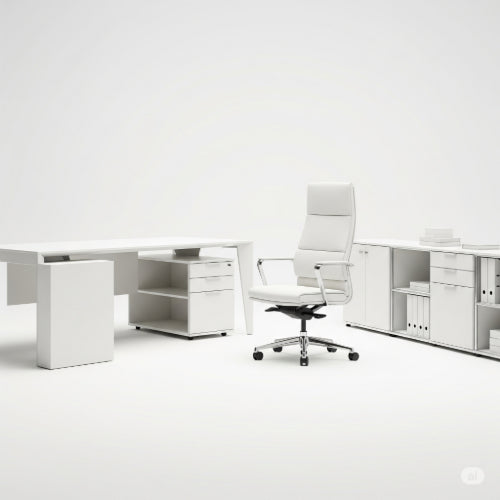
Level Up Your Workspace: How Augmented Reality Will Shape the Office Furniture Market
The days of relying solely on static images and showroom visits to choose office furniture are numbered. A new wave of technology, Augmented Reality (AR), is poised to revolutionize the way we furnish our workspaces, offering an immersive and practical approach to the buying process. From visualizing furniture in your actual office to accessing detailed product information, AR is set to significantly shape the future of the office furniture market.
Visualize Before You Buy: The Power of Placement
One of the most immediate and impactful ways AR will transform the office furniture market is by allowing customers to visualize products in their own spaces before making a purchase. Imagine using a tablet or smartphone to overlay a virtual desk, chair, or shelving unit onto your actual office floor. You can walk around it, view it from different angles, and instantly assess its size, style, and how it complements the existing décor.
This capability solves a major pain point for both consumers and businesses. No more guesswork about whether a piece will fit or clash with the current environment. AR empowers informed decisions, reduces the likelihood of returns, and ultimately leads to greater customer satisfaction.
Enhanced Product Information at Your Fingertips
AR can also enrich the product information available to potential buyers. By simply pointing a device at a piece of furniture, users could access a wealth of digital information overlaid onto their view. This could include:
-
Detailed specifications: Dimensions, materials, weight capacity, and assembly instructions.
-
3D models and animations: Allowing for a closer look at the product's design and functionality.
-
Customer reviews and ratings: Providing social proof and insights from other buyers.
-
Related products and accessories: Suggesting complementary items to complete the workspace.
This instant access to comprehensive information empowers customers to make well-informed choices without needing to sift through multiple websites or catalogs.
Personalized Design and Configuration
AR opens up exciting possibilities for personalized design and configuration of office furniture. Imagine an application that allows you to customize the color, material, and features of a desk or chair and then instantly visualize the changes in your own office space. Businesses planning larger office layouts could use AR tools to experiment with different furniture arrangements, ensuring optimal space utilization and workflow.
This level of customization and visualization streamlines the design process, making it more intuitive and collaborative. Furniture manufacturers can leverage AR to offer personalized experiences and cater to specific customer needs more effectively.
Virtual Showrooms and Remote Shopping
AR is breaking down geographical barriers and transforming the showroom experience. Furniture retailers can create immersive virtual showrooms accessible through AR-enabled devices. Customers can "walk" through these virtual spaces, interact with products, and even consult with sales representatives remotely, all from the comfort of their own location.
This offers convenience for busy professionals and expands the reach of furniture businesses beyond their physical locations. AR-powered remote shopping can also reduce overhead costs associated with maintaining large physical showrooms.
Training and Maintenance
Beyond the purchasing process, AR can also play a role in the ongoing use and maintenance of office furniture. Assembly instructions could be presented as interactive AR guides, making the setup process easier and more efficient. For facility management, AR could provide quick access to maintenance manuals or even guide technicians through repair procedures.
The Future is Immersive
Augmented Reality is poised to become an indispensable tool in the office furniture market. Its ability to bridge the gap between the digital and physical worlds offers significant advantages for both businesses and consumers. By enabling visualization, enhancing information access, facilitating personalization, and transforming the shopping experience, AR will undoubtedly shape the future of how we design and equip our workspaces in Daet, Bicol, Philippines, and beyond. As AR technology continues to advance and become more accessible, we can expect to see even more innovative applications emerge in this dynamic industry.