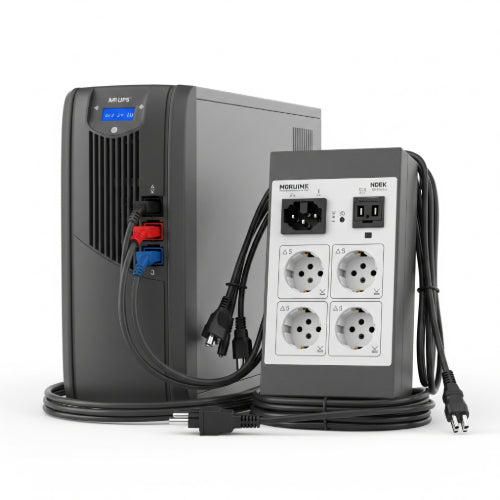
Powering Up Efficiency: The Role of Cloud Computing in UPS and PDU Management
In today's interconnected world, uptime is paramount. For businesses, downtime isn't just an inconvenience; it's a direct hit to productivity, revenue, and reputation. Uninterruptible Power Supplies (UPS) and Power Distribution Units (PDU) are the silent guardians of your critical infrastructure, ensuring a steady, clean power supply to your servers, network devices, and other vital equipment. But managing these essential power components across multiple locations or even within a single, complex data center can be a daunting task.
This is where cloud computing steps in, revolutionizing how we monitor, manage, and optimize UPS and PDU systems. By moving power infrastructure management to the cloud, businesses can gain unprecedented visibility, control, and efficiency.
1. Centralized Monitoring and Visibility: A Single Pane of Glass
- Traditional Challenge: Monitoring UPS and PDUs often involved disparate systems, local software, or even manual checks. For organizations with multiple sites or large data centers, getting a holistic view of power status was a complex and time-consuming endeavor.
- Cloud Solution: Cloud-based UPS and PDU management platforms aggregate data from all connected devices into a single, intuitive dashboard. You can monitor battery status, load levels, voltage fluctuations, temperature, and power consumption across your entire infrastructure from anywhere with an internet connection.
- Benefit: Real-time, centralized visibility eliminates blind spots, simplifies oversight, and allows for proactive identification of potential issues before they escalate.
2. Remote Management and Control: Power at Your Fingertips
- Traditional Challenge: Responding to power alerts often required on-site personnel to physically interact with the UPS or PDU for tasks like remotely cycling power to a server, checking logs, or adjusting settings.
- Cloud Solution: Cloud platforms enable remote control over your power infrastructure. You can remotely power cycle individual outlets on a PDU, initiate UPS battery tests, adjust thresholds for alerts, and even perform firmware updates, all from a web browser or mobile app.
- Benefit: Drastically reduced response times, minimized need for on-site presence for routine tasks, and the ability to resolve issues quickly, even when staff aren't physically present.
3. Advanced Analytics and Predictive Maintenance:
- Traditional Challenge: Identifying trends or predicting failures was largely reactive or based on scheduled maintenance. Data was often siloed and difficult to analyze for patterns.
-
Cloud Solution: Cloud platforms leverage powerful analytics and machine learning algorithms to process vast amounts of operational data from your UPS and PDUs. This allows for:
- Trend Analysis: Identifying subtle power fluctuations or load changes that could indicate underlying problems.
- Predictive Battery Failure: Algorithms can learn battery degradation patterns and alert you well in advance when a battery is likely to fail, allowing for proactive replacement and preventing unexpected outages.
- Efficiency Optimization: Analyzing power consumption patterns to identify opportunities for energy savings and more efficient load distribution.
- Benefit: Move from reactive troubleshooting to proactive, data-driven maintenance, significantly improving reliability and reducing costly downtime.
4. Enhanced Alerting and Notification Systems:
- Traditional Challenge: Alerts might be confined to local network monitoring tools or simple email notifications that could be missed.
- Cloud Solution: Cloud-based systems offer sophisticated, customizable alerting. You can configure alerts for specific events (e.g., power outage, battery low, overload) and have them sent via multiple channels – email, SMS, mobile app push notifications, or integration with IT ticketing systems.
- Benefit: Ensures that the right personnel are notified immediately, regardless of their location, facilitating rapid response to critical power events.
5. Scalability and Flexibility:
- Traditional Challenge: Expanding power monitoring capabilities meant investing in and configuring additional on-premise hardware and software for each new device or location.
- Cloud Solution: Cloud platforms are inherently scalable. Adding new UPS or PDU devices to your monitoring system is often as simple as connecting them to the network and enrolling them in the cloud service. This makes it ideal for growing businesses or those with distributed operations.
- Benefit: Simplifies expansion, reduces capital expenditure on monitoring infrastructure, and provides a flexible solution that adapts to evolving business needs.
The Future is Connected Power:
The integration of cloud computing with UPS and PDU management is transforming power infrastructure from a static necessity into a dynamic, intelligent, and remotely manageable asset. For businesses striving for maximum uptime and operational efficiency, leveraging the cloud for power management is no longer an option – it's becoming a strategic imperative.