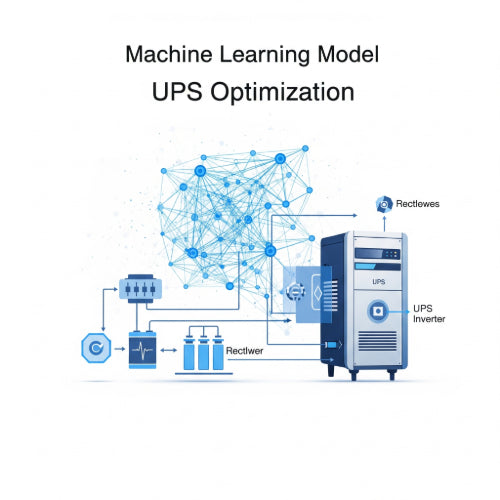
Powering Up with Precision: How Machine Learning Will Optimize UPS Systems
In an age where continuous uptime is paramount, Uninterruptible Power Supply (UPS) systems are the unsung heroes of data centers, businesses, and critical infrastructure. They act as the last line of defense against power fluctuations and outages, safeguarding sensitive equipment and invaluable data. However, managing these complex systems for optimal efficiency and reliability has traditionally relied on reactive measures and static configurations.
This is where the transformative power of Machine Learning (ML) comes into play. ML is set to revolutionize UPS systems, turning them into intelligent, proactive guardians of power, ensuring maximum efficiency, extended lifespan, and unparalleled reliability.
The Challenges of Traditional UPS Management:
Before diving into ML's solutions, let's understand the limitations of conventional UPS approaches:
-
Reactive Maintenance: Repairs and replacements often occur after a failure, leading to costly downtime and emergency interventions.
-
Suboptimal Efficiency: UPS systems frequently operate under fixed settings, even when load demands fluctuate, leading to wasted energy from over-provisioning or inefficient operation.
-
Limited Visibility: Understanding the true "health" of components, especially batteries, can be difficult without detailed, continuous data analysis.
-
Lack of Predictive Capabilities: Anticipating potential issues like component degradation or battery end-of-life is largely guesswork.
-
Human Error: Manual monitoring and adjustments are prone to human oversight and slow response times.
How Machine Learning is Revolutionizing UPS Optimization:
ML algorithms, with their ability to learn from vast datasets and identify complex patterns, are ideally suited to address these challenges.
1. Predictive Maintenance: From Reactive to Proactive
This is one of the most impactful applications. ML algorithms can analyze massive streams of sensor data from UPS components – battery temperature, voltage, current, fan speeds, humidity, and more.
-
Anomaly Detection: ML models can detect subtle deviations from normal operating parameters that might indicate an impending failure, long before a human operator would notice.
-
Component Lifespan Prediction: By analyzing degradation patterns and historical data, ML can accurately predict the remaining useful life of batteries, capacitors, and other critical components, allowing for scheduled replacements rather than emergency ones.
-
Reduced Downtime & Costs: Proactive maintenance minimizes unexpected outages, extends the lifespan of expensive equipment, and significantly reduces emergency repair costs.
2. Energy Efficiency and Load Optimization:
UPS systems consume energy even in standby mode. ML can drastically reduce this waste.
-
Dynamic Load Balancing: ML algorithms can learn typical load patterns and predict demand spikes. They can then dynamically adjust power distribution, optimize charge/discharge cycles for batteries, and intelligently switch between different operating modes (e.g., eco-mode) to maximize efficiency based on real-time load and power quality.
-
Optimized Power Factor Correction: ML can fine-tune power factor correction, reducing reactive power and improving overall power quality, which translates directly to lower energy bills.
-
Integration with Grid & Renewables: Future UPS systems will interact more intelligently with the smart grid. ML can optimize charging from renewable sources or participate in demand response programs, further reducing costs and carbon footprint by buying/selling power based on real-time prices and grid stability.
3. Enhanced Battery Management:
Batteries are the most vulnerable and costly component of a UPS. ML provides granular insights and intelligent management.
-
Precise State-of-Health (SOH) Monitoring: Beyond simple voltage checks, ML can accurately assess the true health and capacity of individual battery cells, identifying weak links before they impact the entire string.
-
Optimized Charging Cycles: ML can tailor charging and discharging cycles to minimize stress on batteries, extending their operational life and improving their performance over time.
-
Thermal Management: ML can precisely control cooling within battery cabinets, preventing overheating or under-cooling, both of which degrade battery life.
4. Remote Monitoring, Control, and Autonomous Operation:
ML enables a new level of intelligent automation for UPS systems.
-
Real-time Insights: Operators will have access to comprehensive, real-time dashboards powered by ML insights, providing a clear picture of system health, efficiency, and potential risks, accessible from anywhere.
-
Automated Response: In the event of a minor anomaly, ML-powered systems could automatically initiate corrective actions, minimizing the need for human intervention and ensuring faster recovery times.
-
Self-Healing Systems: In the long term, we could see self-healing UPS architectures where ML detects faults and automatically reconfigures power paths or isolates issues to maintain continuous power.
The Future of Power Protection is Intelligent:
The integration of Machine Learning into UPS systems marks a significant leap from reactive maintenance to proactive, intelligent power management. For data centers, hospitals, manufacturing plants, and any business where uptime is critical, ML-driven UPS optimization will translate into:
-
Reduced operational costs through energy savings and less frequent, more predictable maintenance.
-
Increased reliability and significantly less downtime.
-
Extended equipment lifespan, maximizing return on investment.
-
Greater sustainability through optimized energy use.
As our digital world demands ever more robust and efficient power infrastructure, Machine Learning is proving to be the essential tool for ensuring that our UPS systems are not just reliable, but also remarkably smart and sustainable. The future of uninterruptible power is intelligently optimized.