Rack Cabinets vs. Open Frame Racks: Which Is Best for Your Data Center?
In the intricate world of data centers and server rooms, efficient organization and protection of IT equipment are paramount. Two primary solutions for housing servers, switches, and other networking gear are rack cabinets (also known as server cabinets or enclosures) and open frame racks. While both serve the purpose of mounting equipment, their design differences significantly impact security, cooling, and accessibility.
Choosing between them requires a careful assessment of your specific data center needs. Let's explore the pros and cons of each.
Rack Cabinets (Enclosed Racks): The Secure Sanctuary
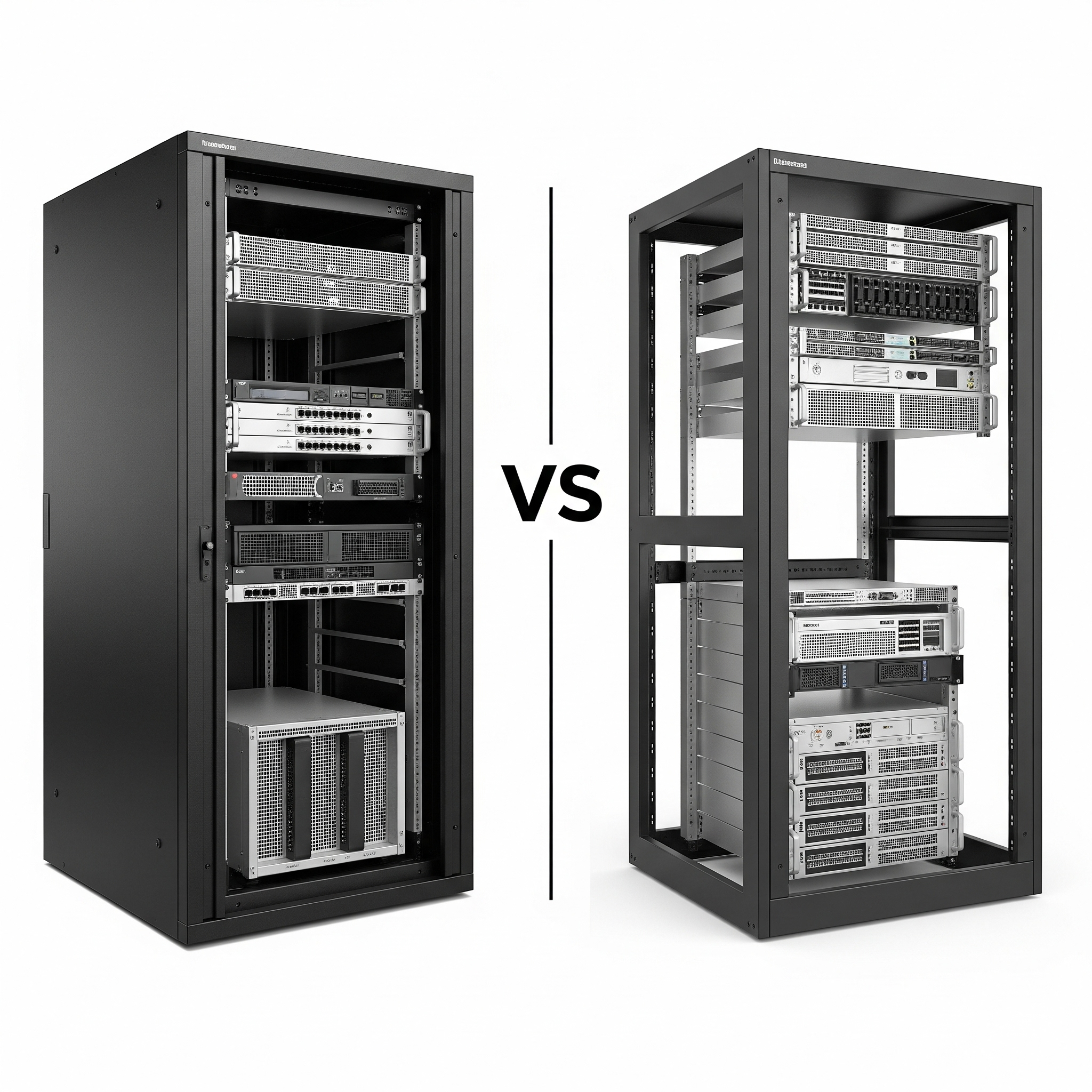
Rack cabinets are fully enclosed structures with front and rear doors, and often side panels. They come in various sizes (measured in "U" units, where 1U equals 1.75 inches) and depths to accommodate different types of equipment.
Pros:
- Security: This is often the primary advantage. Lockable doors and side panels prevent unauthorized access to sensitive equipment, crucial for data centers handling confidential information or located in shared spaces.
- Environmental Control: Enclosed racks provide a more controlled environment. They can be sealed to manage airflow, filter dust, and facilitate more efficient cooling strategies, especially in hot aisle/cold aisle containment systems.
- Cable Management: Often come with integrated cable management features (e.g., vertical cable managers, brush strips) that help organize and protect cables, reducing clutter and improving airflow.
- Aesthetics and Noise Reduction: They offer a cleaner, more professional appearance and can significantly reduce the noise emitted by server fans, making them suitable for office environments or smaller server rooms.
- Equipment Protection: Protect equipment from accidental bumps, spills, and general dust accumulation.
Cons:
- Airflow Challenges: While good for controlled cooling, poor fan placement or insufficient airflow management within a cabinet can lead to hot spots. Requires careful planning of intake and exhaust.
- Cost: Generally more expensive upfront than open frame racks due to the added materials, doors, and features.
- Weight and Bulk: Heavier and more cumbersome to move or install, especially when fully loaded.
- Accessibility: Doors and panels need to be opened for equipment access, which can be less convenient for frequent hands-on work.
Best Use Cases for Rack Cabinets:
- Data Centers: Especially those with high-density server deployments or strict security requirements.
- Shared Office Spaces: Where equipment needs to be secured and noise minimized.
- Environments with Dust/Particulates: Where environmental protection is needed.
- Co-location Facilities: Where multiple tenants share space and security is paramount.
Open Frame Racks: The Accessible Framework
Open frame racks are essentially skeletal structures, typically consisting of two or four vertical posts, with no doors, side panels, or solid top/bottom. They are designed for maximum airflow and easy access.
Pros:
- Maximum Airflow and Cooling: With no obstructing panels, open frame racks allow for unrestricted airflow, making cooling simpler and more efficient for equipment that generates a lot of heat. This can sometimes reduce cooling costs.
- Cost-Effective: Significantly cheaper than enclosed cabinets, making them an attractive option for budget-conscious setups.
- Easy Accessibility: Unrestricted access to all sides of the equipment and cabling, which simplifies installation, maintenance, and troubleshooting. Ideal for situations where technicians need frequent physical access.
- Lighter and Simpler Installation: Easier to move, assemble, and install due to their lighter weight and simpler construction.
- Quick Deployment: Faster to deploy equipment into as there are fewer parts to assemble or remove.
Cons:
- No Security: Equipment is completely exposed, offering no protection against unauthorized access or tampering.
- No Environmental Protection: Equipment is vulnerable to dust, accidental spills, and physical damage.
- Noise: All equipment noise is fully exposed.
- Cable Management Challenges: While you can add external cable management, they don't typically come with integrated solutions, requiring more manual effort to keep cables tidy.
- Aesthetics: Generally less aesthetically pleasing than enclosed cabinets, often looking more "industrial."
Best Use Cases for Open Frame Racks:
- Labs and Test Environments: Where frequent access and reconfigurations are common.
- Secure, Dedicated Server Rooms: Where physical security is already provided by the room itself, and IT staff have controlled access.
- Network Closets: For housing network switches and patch panels where easy access for patching is required.
- Situations with High-Density Cooling Needs: Where maximizing airflow is the top priority and security is handled at the room level.
Making the Right Choice for Your Data Center
The decision between rack cabinets and open frame racks hinges on your specific priorities:
- Security: If unauthorized physical access is a concern, rack cabinets are the clear choice.
- Cooling Efficiency: If you have high-density equipment generating significant heat and you want to maximize airflow with minimal obstruction, open frame racks might be more suitable, assuming room-level security.
- Budget: Open frame racks are more budget-friendly for initial setup.
- Accessibility: For environments requiring frequent hands-on maintenance, open frame racks offer superior accessibility.
- Noise and Aesthetics: For shared spaces or offices, rack cabinets offer better noise reduction and a cleaner look.
Many larger data centers utilize a combination of both – enclosed cabinets for high-density servers and critical infrastructure, and open frame racks for less sensitive equipment or for staging/testing areas.
By carefully evaluating your needs for security, cooling, accessibility, and budget, you can select the rack solution that best supports the performance and longevity of your vital IT infrastructure.