The Blueprint of Tomorrow: Smart Offices and Automation Revolutionizing Workspace Design
The modern office is no longer a static collection of desks and chairs. It's a dynamic, evolving ecosystem, and the future of workspace design is being shaped by two powerful forces: smart technology and automation. These aren't just buzzwords; they represent a fundamental shift in how we conceive and interact with our work environments, promising greater efficiency, comfort, and adaptability.
Imagine an office that anticipates your needs, optimizes its resources, and fosters a seamless blend of physical and digital interactions. This is the vision of the smart, automated workspace, and it's rapidly becoming a reality. Let's explore the key trends that are defining this exciting future:
Intelligent Buildings: The Foundation of Smart Workspaces:
At the core of the smart office lies the intelligent building. Powered by IoT (Internet of Things) sensors and sophisticated software, these buildings can:
-
Optimize Energy Consumption: Smart lighting systems adjust brightness based on occupancy and natural light, while automated HVAC (heating, ventilation, and air conditioning) systems learn usage patterns to regulate temperature efficiently, leading to significant cost savings and a reduced environmental footprint.
-
Enhance Security and Access Control: Keyless entry systems, smart surveillance with facial recognition, and automated visitor management streamline security protocols and provide a more seamless experience for employees and guests.
-
Improve Space Utilization: Sensors can track occupancy levels in different areas, providing valuable data for optimizing floor plans, identifying underutilized spaces, and facilitating agile working arrangements.
The Rise of Automated Workflows:
Beyond the building itself, automation is transforming daily office tasks and workflows:
-
Smart Meeting Rooms: Booking systems that integrate with calendars, automated AV setup, and even AI-powered transcription services streamline meetings and enhance productivity.
-
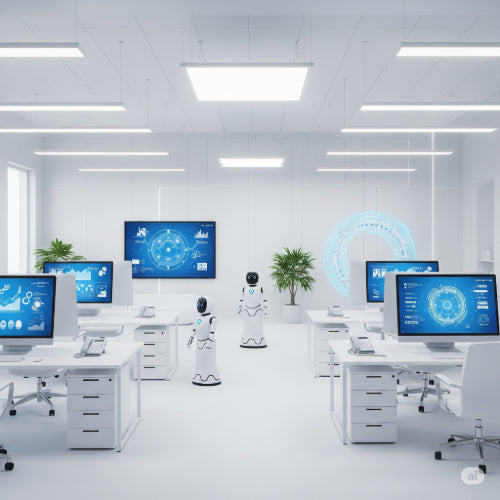
Robotics for Repetitive Tasks: While not yet ubiquitous, robots are starting to appear in offices for tasks like cleaning, delivering mail, and even stocking supplies, freeing up human employees for more complex and strategic work.
-
Intelligent Assistants: AI-powered virtual assistants can manage schedules, answer common questions, and automate routine administrative tasks, boosting individual and team efficiency.
Human-Centric Design in a Smart World:
While technology is at the forefront, the future of workspace design remains fundamentally human-centric. Smart offices should enhance the employee experience, not replace human interaction. This means:
-
Personalized Comfort: Smart systems can allow employees to customize their immediate environment, adjusting lighting, temperature, and even desk height to their preferences.
-
Biophilic Design Integration: Combining smart technology with natural elements like plants, natural light, and views of nature creates healthier and more engaging workspaces. Smart sensors can even monitor air quality and adjust ventilation accordingly.
-
Flexible and Adaptable Spaces: Automation allows for more dynamic use of space. Modular furniture, adaptable walls, and smart partitions can be reconfigured quickly to suit different needs, from individual focused work to team collaboration.
Data-Driven Optimization and Continuous Improvement:
The data generated by smart office systems provides valuable insights for continuous improvement. By analyzing usage patterns, energy consumption, and employee feedback, businesses can:
-
Refine Workspace Design: Identify areas for optimization based on how employees actually use the space.
-
Improve Operational Efficiency: Fine-tune automated systems for maximum performance and cost-effectiveness.
-
Enhance Employee Well-being: Create a more comfortable, productive, and engaging work environment based on data-driven insights.
Challenges and Considerations:
While the potential of smart offices and automation is immense, there are challenges to consider:
-
Initial Investment Costs: Implementing smart technologies can involve significant upfront expenses.
-
Data Privacy and Security: Robust security measures are crucial to protect the vast amounts of data collected by smart office systems.
-
Integration and Interoperability: Ensuring seamless communication between different smart devices and platforms is essential for a cohesive and efficient system.
-
The Human Element: Change management and employee training are necessary to ensure successful adoption of new technologies and workflows.
Conclusion: Embracing the Intelligent Workspace
The future of workspace design is intelligent, automated, and ultimately, more human-centric. By strategically leveraging smart technologies and automation, businesses can create dynamic, efficient, and engaging environments that empower their employees, optimize resource utilization, and drive innovation. As technology continues to evolve, the blueprint of tomorrow's office will be one of seamless integration, adaptability, and a focus on creating the best possible experience for everyone who walks through its (potentially keyless) doors.