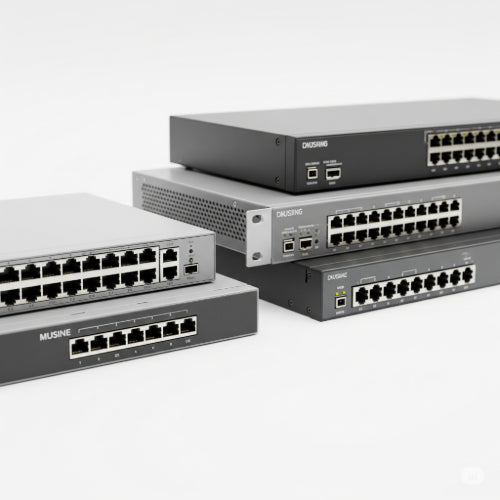
The Intelligent Network: How Network Switches Are Becoming Smarter with AI Integration
For years, network switches have been the unsung heroes of our digital infrastructure, reliably forwarding data packets and keeping our networks connected. However, these essential devices are undergoing a significant transformation, moving beyond basic connectivity to embrace the power of Artificial Intelligence (AI). This integration is ushering in an era of smarter, more efficient, and more secure networks, capable of self-optimization and proactive problem-solving.
Beyond Basic Packet Forwarding:
Traditional network switches operate based on predefined rules and protocols. They learn MAC addresses, build forwarding tables, and direct traffic accordingly. While effective, this approach often requires manual configuration and lacks the adaptability to respond dynamically to complex network conditions and emerging threats.
AI integration is changing this paradigm. By embedding AI and Machine Learning (ML) capabilities directly into network switches, vendors are creating devices that can:
1. Enhance Network Performance and Optimization:
- Intelligent Traffic Management: AI-powered switches can analyze network traffic patterns in real-time, identify bottlenecks, and dynamically adjust Quality of Service (QoS) settings to prioritize critical applications and ensure optimal performance.
- Automated Configuration and Provisioning: AI can automate complex configuration tasks, simplifying network deployment and reducing the risk of human error. It can also learn optimal configurations based on network behavior.
- Predictive Analytics and Capacity Planning: By analyzing historical and real-time data, AI can predict future network demands, allowing administrators to proactively plan for capacity upgrades and avoid performance degradation.
2. Strengthen Network Security:
- Anomaly Detection: AI algorithms can learn the baseline behavior of network traffic and identify deviations that may indicate security breaches, malware infections, or denial-of-service attacks.
- Threat Identification and Mitigation: AI-powered switches can analyze traffic patterns to identify known and emerging threats, automatically isolating compromised devices or blocking malicious traffic at the network edge.
- Micro-segmentation Enforcement: AI can assist in implementing and enforcing micro-segmentation policies, limiting the lateral movement of threats within the network.
3. Simplify Network Management and Troubleshooting:
- Intelligent Monitoring and Visibility: AI provides deeper insights into network performance, identifying root causes of issues faster and providing administrators with actionable intelligence.
- Automated Troubleshooting and Remediation: AI can automatically diagnose common network problems and even initiate self-healing processes, reducing downtime and the need for manual intervention.
- Natural Language Interfaces: Some AI-integrated switches are beginning to incorporate natural language processing, allowing administrators to manage and query the network using simple voice commands or text-based queries.
The Benefits of Smarter Switches:
The integration of AI into network switches offers a multitude of benefits for organizations:
- Improved Network Efficiency and Performance: Dynamic optimization and intelligent traffic management lead to faster speeds, lower latency, and a better user experience.
- Enhanced Security Posture: Proactive threat detection and automated response mechanisms strengthen the network's defenses against cyberattacks.
- Reduced Operational Costs: Automation of configuration, troubleshooting, and maintenance tasks frees up IT staff to focus on more strategic initiatives.
- Increased Network Reliability and Uptime: Self-healing capabilities and predictive analytics minimize downtime and ensure business continuity.
- Greater Scalability and Adaptability: AI-powered switches can adapt more readily to changing network demands and new technologies.
The Future of Intelligent Networking:
As AI technology continues to advance, we can expect network switches to become even smarter and more autonomous. They will play a central role in building self-driving networks that can proactively manage, optimize, and secure themselves. This evolution promises to revolutionize network management, paving the way for more agile, resilient, and high-performing digital infrastructures that can support the growing demands of our interconnected world.
While the journey of AI integration in network switches is still in its early stages, the potential benefits are immense. Organizations that embrace this technological shift will be well-positioned to build the intelligent networks of the future.