The Pros and Cons of Sit/Stand Desks vs. Traditional Desks: What’s Best for Your Workspace?
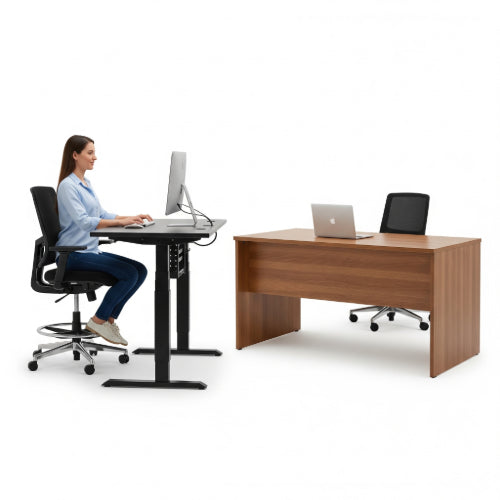
For decades, the traditional office desk has been a staple of workplaces everywhere. But as our understanding of health and productivity has evolved, a new contender has risen in popularity: the sit/stand desk, also known as a standing desk or adjustable-height desk. This innovative piece of furniture allows you to seamlessly switch between sitting and standing while you work.
The question for many is: which is truly the best option for your workspace? Both have distinct advantages and disadvantages. Let's break them down to help you make an informed decision.
Traditional Desks: The Tried-and-True Standard
A traditional desk is a fixed-height workstation, typically designed for sitting.
Pros of Traditional Desks:
- Cost-Effective: Generally, traditional desks are significantly more affordable than sit/stand models, making them a budget-friendly choice for individuals and companies outfitting multiple workstations.
- Simplicity and Stability: With fewer moving parts, traditional desks are inherently simpler in design and often offer superior stability, especially for heavier multi-monitor setups.
- Aesthetics: They come in a vast array of styles, materials, and sizes, making it easy to find one that matches any office decor or personal preference.
- Easy to Set Up: Assembly is usually straightforward, and once it's in place, there's no complex operation to learn.
Cons of Traditional Desks:
- Promotes Sedentary Behavior: This is the biggest drawback. Prolonged sitting has been linked to numerous health issues, including increased risk of heart disease, diabetes, obesity, and musculoskeletal problems like back pain.
- Reduced Energy Levels: Sitting for long periods can lead to sluggishness and decreased mental alertness, impacting productivity.
- Limited Ergonomic Flexibility: While ergonomic chairs help, a fixed-height desk restricts your ability to change posture and engage different muscle groups throughout the day.
Sit/Stand Desks: The Modern, Dynamic Approach
A sit/stand desk allows you to electrically or manually adjust the desk height, enabling you to work comfortably while sitting or standing.
Pros of Sit/Stand Desks:
- Improved Health: The primary benefit. Regularly switching between sitting and standing can reduce the risks associated with prolonged sitting, alleviate back and neck pain, improve circulation, and potentially lower the risk of chronic diseases.
- Increased Energy & Focus: Standing can boost alertness, energy levels, and cognitive function, leading to greater productivity and creativity throughout the workday.
- Enhanced Calorie Burn: While not a substitute for exercise, standing burns more calories than sitting.
- Better Posture: Encourages better posture and engagement of core muscles.
- Versatility: Accommodates different users with varying height preferences or even different tasks that might be better performed standing.
Cons of Sit/Stand Desks:
- Higher Cost: Sit/stand desks, particularly electric models, are a more significant investment upfront than traditional desks.
- Learning Curve: It takes time to adjust to working while standing. Beginners may experience leg or foot fatigue initially. Proper footwear and anti-fatigue mats are often necessary.
- Potential Stability Issues (for some models): While many high-quality sit/stand desks are very stable, some less expensive models, particularly at their maximum height, might exhibit slight wobbling.
- Cable Management Challenges: With a moving desk, cable management requires more thought and often specialized accessories to prevent snagging or pulling.
- Power Dependency (for electric models): Electric sit/stand desks require a power outlet.
Which is Best for Your Workspace?
The choice between a sit/stand desk and a traditional desk largely depends on your priorities, health considerations, and budget.
-
Choose a Traditional Desk if:
- Budget is your absolute top priority.
- You primarily perform tasks that are best done seated for short durations.
- You have very limited space and need a simple, compact solution.
- You prefer a purely minimalist aesthetic without any visible mechanisms.
-
Choose a Sit/Stand Desk if:
- Your health and well-being are a priority. You want to mitigate the risks of prolonged sitting and improve your physical comfort.
- You seek to boost productivity and energy levels.
- You spend long hours at your desk and want the flexibility to change positions.
- You are willing to invest more for the long-term benefits.
- You want a dynamic workspace that can adapt to different tasks or users.
Making the Transition to Standing (If You Choose a Sit/Stand Desk)
If you opt for a sit/stand desk, remember that the goal is not to stand all day. The key is movement and variation. Start by standing for short periods (e.g., 15-30 minutes every hour) and gradually increase as your body adjusts. An anti-fatigue mat can significantly improve comfort while standing.
Conclusion
While traditional desks remain a viable and affordable option, the health and productivity benefits offered by sit/stand desks make them a compelling choice for the modern workspace. For many, the investment in a sit/stand desk is an investment in long-term health, comfort, and enhanced workday vitality. Evaluate your own needs and how you work, and choose the desk that will best support your well-being and productivity.