The Smart Edge: How Smart Office Solutions Elevate Hybrid Work Models
The hybrid work model, a blend of in-office and remote work, has firmly established itself as the new standard for many organizations. It offers unparalleled flexibility, attracting diverse talent and enhancing employee satisfaction. However, making this model truly effective and seamless requires more than just a rota and a video conferencing tool. This is where smart office solutions come into play, transforming physical workspaces into dynamic, responsive environments that perfectly complement the agility of hybrid teams.
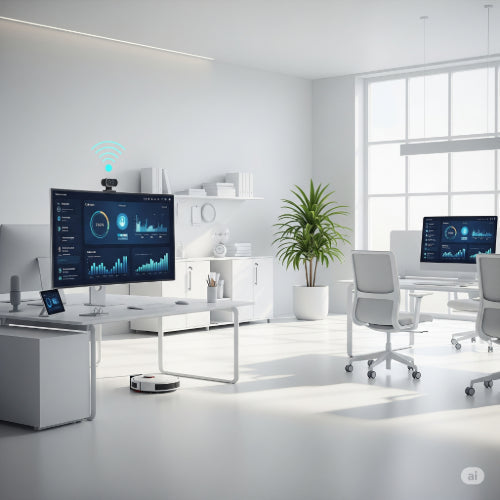
Smart office solutions leverage the power of interconnected technologies – from the Internet of Things (IoT) and Artificial Intelligence (AI) to cloud computing and advanced analytics – to create an intelligent ecosystem. This ecosystem provides a wealth of benefits that are particularly crucial for the success of hybrid work:
1. Seamless Space Management and Optimization
One of the biggest challenges of hybrid work is managing fluctuating office occupancy. Smart office solutions provide real-time visibility and control:
-
Desk and Room Booking Systems: Employees can easily view and reserve desks, meeting rooms, and collaborative spaces via mobile apps or web platforms. This eliminates the frustration of arriving at the office only to find no available workspace or a double-booked meeting room.
-
Occupancy Sensors: IoT sensors detect real-time occupancy in various areas, providing valuable data on space utilization. This data helps organizations understand peak usage times, optimize office layouts, and even right-size their physical footprint, leading to significant cost savings.
-
Wayfinding and Navigation: For larger offices, smart wayfinding solutions with interactive maps can guide employees and visitors to their booked desks, meeting rooms, or specific departments, enhancing efficiency and reducing wasted time.
2. Enhanced Collaboration and Communication
Bridging the gap between in-office and remote team members is paramount for hybrid success. Smart office solutions make collaboration effortless:
-
Intelligent Meeting Rooms: Equipped with integrated video conferencing systems, smart whiteboards, and automated setup, these rooms ensure that remote participants have an equally immersive and productive experience as those in the physical room. AI can even facilitate note-taking and transcription.
-
Unified Communication Platforms: Seamless integration of messaging, video calls, and file sharing platforms ensures that communication flows freely, regardless of an employee's location.
-
Digital Signage for Information Dissemination: Strategically placed digital screens can display real-time announcements, company news, meeting schedules, and even social media feeds, keeping everyone informed and connected.
3. Personalized Comfort and Well-being
A comfortable and healthy work environment contributes directly to productivity and employee retention. Smart office solutions offer a personalized touch:
-
Smart Climate and Lighting Control: IoT sensors can detect occupancy and ambient conditions, automatically adjusting HVAC systems and lighting to maintain optimal temperature and illumination levels. Employees can often personalize these settings via an app.
-
Ergonomic Furniture: While not strictly "smart solutions" in the connectivity sense, smart offices often incorporate ergonomic furniture like adjustable sit-stand desks that can be programmed to individual preferences, promoting better posture and reducing fatigue.
-
Air Quality Monitoring: Sensors can monitor indoor air quality, providing alerts if pollutant levels rise and even triggering ventilation systems, ensuring a healthier environment for those working on-site.
4. Operational Efficiency and Sustainability
Smart office solutions don't just benefit employees; they also provide tangible advantages for the business:
-
Predictive Maintenance: IoT devices in office equipment (printers, coffee machines, etc.) can monitor their own performance and signal potential issues before they lead to breakdowns, minimizing downtime and maintenance costs.
-
Energy Optimization: Automated systems for lighting, HVAC, and power management based on occupancy and schedules significantly reduce energy consumption, contributing to both cost savings and sustainability goals.
-
Data-Driven Insights: The vast amount of data collected by smart office systems provides invaluable insights into office utilization, energy consumption, and equipment performance, enabling informed decision-making for future strategies.
The Future of Flexible Work is Smart
For organizations embracing hybrid work, smart office solutions are no longer a luxury but a strategic imperative. They empower employees with the flexibility they need, optimize valuable office space, foster seamless collaboration, and drive operational efficiencies. By investing in these intelligent technologies, businesses can create a truly adaptive, productive, and inviting work environment that supports the dynamic nature of the modern workforce, ensuring long-term success in the evolving landscape of work.