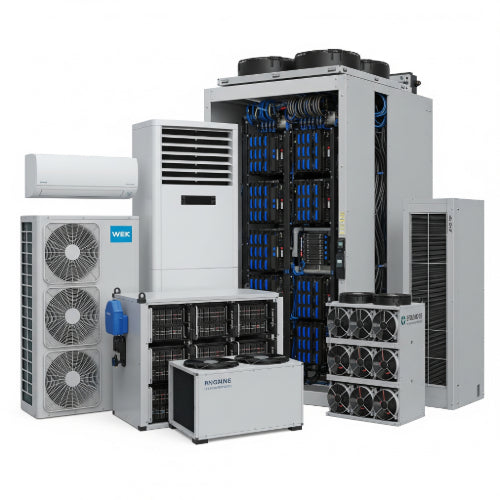
Keeping Your Cool (Literally): The Rise of AI-Driven Cooling Systems for Data Centers
Data centers are the beating heart of our digital world, powering everything from cloud services to streaming video and, increasingly, the ravenous demands of Artificial Intelligence (AI). But all that computing power generates an enormous amount of heat. Keeping servers cool is not just about preventing meltdowns; it's a monumental energy challenge, with cooling systems often accounting for up to 40% of a data center's total energy consumption.
Enter Artificial Intelligence. AI is no longer just the workload generating the heat; it's rapidly becoming the most powerful tool for managing it. The rise of AI-driven cooling systems is revolutionizing data center efficiency, sustainability, and reliability.
The Hot Problem: Why Traditional Cooling Falls Short
Historically, data centers relied on static, rule-based cooling systems. Think of massive air conditioning units blasting cold air into hot aisles, often over-cooling sections to ensure no "hot spots" developed. This approach is inherently inefficient because:
-
Static Rules, Dynamic Loads: Server workloads constantly fluctuate, yet traditional cooling often operates at maximum capacity regardless of real-time needs.
-
Blind Spots: It's hard to precisely identify and target specific areas that need more cooling, leading to wasted energy.
-
Human Error and Inefficiency: Manual adjustments are slow and prone to error, limiting responsiveness to changing conditions.
-
Heat Density of AI: The latest AI chips (GPUs, TPUs) pack incredible processing power into tiny spaces, generating unprecedented levels of heat density that traditional air cooling struggles to manage.
AI to the Rescue: Smarter, Leaner Cooling
AI-driven cooling systems leverage sophisticated algorithms, machine learning, and real-time data to create dynamic, optimized cooling environments. Here's how they're transforming data center operations:
1. Real-time Optimization and Predictive Analytics:
-
Sensor Data Feast: Thousands of sensors throughout the data center collect continuous data on temperature, humidity, airflow, server workloads, power consumption, and even outside weather conditions.
-
Intelligent Algorithms: AI algorithms, often using deep reinforcement learning, analyze this massive dataset in real-time. They learn complex patterns and relationships that human operators simply can't discern.
-
Dynamic Adjustments: Based on their analysis, the AI systems dynamically adjust cooling parameters. This means precisely controlling fan speeds, chiller operations, water flow in liquid cooling systems, and even strategically opening/closing vents to direct airflow exactly where needed, minimizing over-cooling.
2. Energy Efficiency and Cost Savings:
-
Significant Energy Reductions: By activating only the necessary cooling and precisely targeting hot spots, AI systems drastically reduce energy waste. Google famously reported a 40% reduction in cooling energy consumption (translating to a 15% improvement in overall Power Usage Effectiveness or PUE) after implementing AI-driven cooling in its data centers.
-
Lower Operational Costs: Reduced energy consumption directly translates into substantial cost savings on electricity bills, a major operating expense for data centers.
3. Enhanced Reliability and Hardware Longevity:
-
Preventing Overheating: AI ensures that hardware components consistently operate within their optimal temperature ranges, reducing thermal stress. This prevents performance throttling (where chips slow down to avoid overheating) and extends the lifespan of expensive IT equipment.
-
Predictive Maintenance: By continuously monitoring equipment performance and subtle changes in operational data, AI can predict potential equipment failures before they happen. This enables proactive maintenance, preventing costly downtime and catastrophic outages.
4. Adaptability to High-Density Workloads (Especially AI):
-
Targeted Liquid Cooling: As AI and High-Performance Computing (HPC) drive incredibly high heat densities, liquid cooling solutions (like direct-to-chip or immersion cooling) are becoming essential. AI is crucial in optimizing these complex liquid systems, ensuring precise coolant flow and temperature regulation to individual components.
-
Scalability: AI-driven systems are inherently more scalable, able to adapt to growing IT loads and increasing rack densities without requiring massive, expensive infrastructure overhauls.
Challenges on the Horizon:
While promising, the implementation of AI-driven cooling isn't without its hurdles:
-
Initial Investment: Integrating AI systems can require significant upfront investment in sensors, software, and potentially new cooling infrastructure.
-
Data Quality and Integration: The effectiveness of AI hinges on the quality and volume of data it receives. Integrating diverse sensor data and ensuring its accuracy can be complex.
-
Expertise Gap: Deploying and managing these sophisticated systems requires specialized AI and data science expertise within data center operations teams.
-
Trust and Control: Operators need to trust the AI's autonomous decisions, and robust safety protocols must be in place to prevent unintended consequences.
The Future is Cool (and Smart):
The trajectory is clear: AI is no longer a luxury but a necessity for the next generation of data centers. As AI workloads continue to grow exponentially, pushing the boundaries of heat generation, AI-driven cooling will be critical for maintaining efficiency, reducing environmental impact, and ensuring the uninterrupted flow of our digital world. The data center of tomorrow won't just be powerful; it will be intelligently cool.