Rack Cabinets vs. Wall-Mounted Racks: Which Is Best for Your Space?
When it comes to organizing and protecting your crucial IT equipment, network gear, and servers, choosing the right physical enclosure is just as important as selecting the hardware itself. Two primary options dominate the market: standalone rack cabinets and wall-mounted racks. While both serve the fundamental purpose of housing equipment, they cater to very different needs and environments.
So, which is the best fit for your space? Let's break down the pros and cons of each to help you make an informed decision.
The Mighty Rack Cabinet: Robust & Versatile
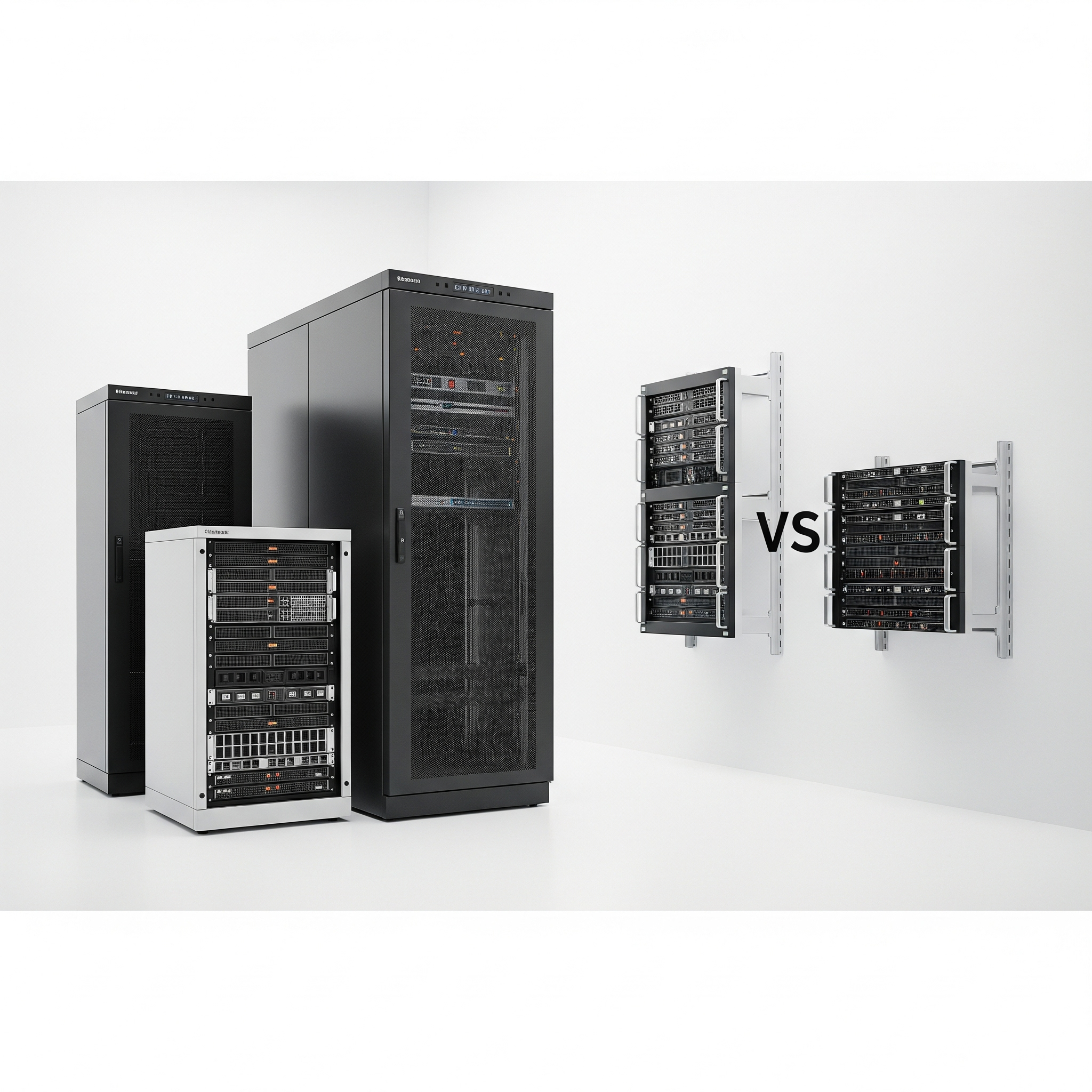
Full-sized rack cabinets, also known as server racks or floor-standing racks, are self-contained enclosures designed to house a significant amount of IT equipment. They typically come in standard widths (like 19-inch) and varying heights (measured in "U" units, where 1U equals 1.75 inches).
Pros of Rack Cabinets:
-
Capacity & Scalability: This is where rack cabinets truly shine. They offer ample space for multiple servers, UPS systems, network switches, patch panels, and other accessories. This makes them ideal for growing businesses or those with substantial IT infrastructure.
-
Security: Most rack cabinets come with lockable doors (front and rear) and side panels, providing a higher level of physical security for your valuable equipment, protecting it from unauthorized access, tampering, or environmental damage.
-
Cable Management: With dedicated cable management features, including vertical and horizontal routing options, rack cabinets help keep cables organized, improve airflow, and make maintenance easier.
-
Cooling & Airflow: Many cabinets are designed with optimized airflow paths, often featuring perforated doors or built-in fan units to facilitate proper cooling, which is crucial for preventing equipment overheating and ensuring longevity.
-
Environmental Protection: They offer better protection against dust, spills, and other environmental factors compared to open frames.
-
Professional Appearance: A well-organized rack cabinet presents a tidy and professional appearance, particularly in server rooms or dedicated IT closets.
Cons of Rack Cabinets:
-
Footprint: They require dedicated floor space, which can be a significant consideration in smaller offices or crowded IT rooms.
-
Cost: Generally, rack cabinets are more expensive than wall-mounted racks, both in terms of initial purchase and potential shipping/installation.
-
Weight & Mobility: Fully loaded cabinets can be extremely heavy and difficult to move, even with casters.
The Nimble Wall-Mounted Rack: Compact & Convenient
Wall-mounted racks, as the name suggests, are designed to be securely fastened to a wall. They are typically smaller than floor-standing cabinets and are often used when floor space is limited or only a few pieces of equipment need to be housed.
Pros of Wall-Mounted Racks:
-
Space-Saving: Their primary advantage is saving valuable floor space. This makes them perfect for small offices, retail environments, classrooms, or areas where IT equipment needs to be out of the way.
-
Cost-Effective: They are generally less expensive than full cabinets, making them a budget-friendly option for smaller deployments.
-
Accessibility: Depending on the design (some feature hinged swing-out sections), they can offer good access to the front and rear of equipment for easy installation and maintenance.
-
Security (Enclosed Models): While open frame versions exist, many wall-mounted racks are enclosed with lockable doors, offering a degree of security for smaller setups.
-
Ideal for Distributed Edge Computing: Perfect for housing network switches and other edge devices in areas like a back office, a production floor, or even a retail storefront, where a full server room isn't practical.
Cons of Wall-Mounted Racks:
-
Limited Capacity: They have a much smaller capacity (fewer "U" units) compared to floor-standing cabinets, restricting the amount of equipment they can hold.
-
Weight Restrictions: You're limited by the wall's load-bearing capacity and the rack's maximum weight rating. Heavy servers are usually not an option.
-
Cooling Challenges: Smaller, enclosed wall-mounted racks can sometimes have more difficulty with heat dissipation if not properly ventilated, especially if multiple devices are generating heat.
-
Cable Management: While they offer some cable management, it's generally less extensive and can become more challenging with a higher density of equipment.
-
Installation Complexity: Proper installation requires securely mounting the rack to a sturdy wall, which might necessitate professional installation depending on the wall material and the rack's weight.
Which Is Best for Your Space?
The choice between a rack cabinet and a wall-mounted rack boils down to a few critical considerations:
-
Available Space:
-
Limited Floor Space? Go for a wall-mounted rack.
-
Dedicated Server Room or IT Closet? A floor-standing cabinet offers more capacity and features.
-
-
Amount of Equipment:
-
Just a few network switches, a modem, or a small DVR? A wall-mounted rack is likely sufficient.
-
Multiple servers, UPS units, and extensive networking gear? A full rack cabinet is indispensable.
-
-
Future Growth:
-
Expecting significant IT expansion? Invest in a larger rack cabinet with room to grow.
-
Needs are stable and minimal? A wall-mounted solution can work.
-
-
Security Needs:
-
High-value equipment requiring maximum physical security? A lockable floor-standing cabinet is preferred.
-
Basic protection needed for less critical gear? An enclosed wall-mounted rack can suffice.
-
-
Cooling Requirements:
-
High-density, heat-generating equipment? A well-ventilated floor-standing cabinet is essential.
-
Fewer, lower-power devices? A wall-mounted rack with adequate passive ventilation or small fans might be fine.
-
-
Budget:
-
Cost-conscious for minimal setup? Wall-mounted racks are more economical.
-
Ultimately, both rack cabinets and wall-mounted racks are valuable tools for organizing and protecting your IT assets. By carefully assessing your current and future needs, available space, and budget, you can select the solution that best supports your operational requirements and ensures the longevity of your crucial technology infrastructure.